By Best Gardening Picks Daily • July 21, 2026 • Contains affiliate links
Affiliate Disclosure: As an Amazon Associate, we earn from qualifying purchases. Clicking our links costs you nothing extra and helps us keep reviewing products for free.
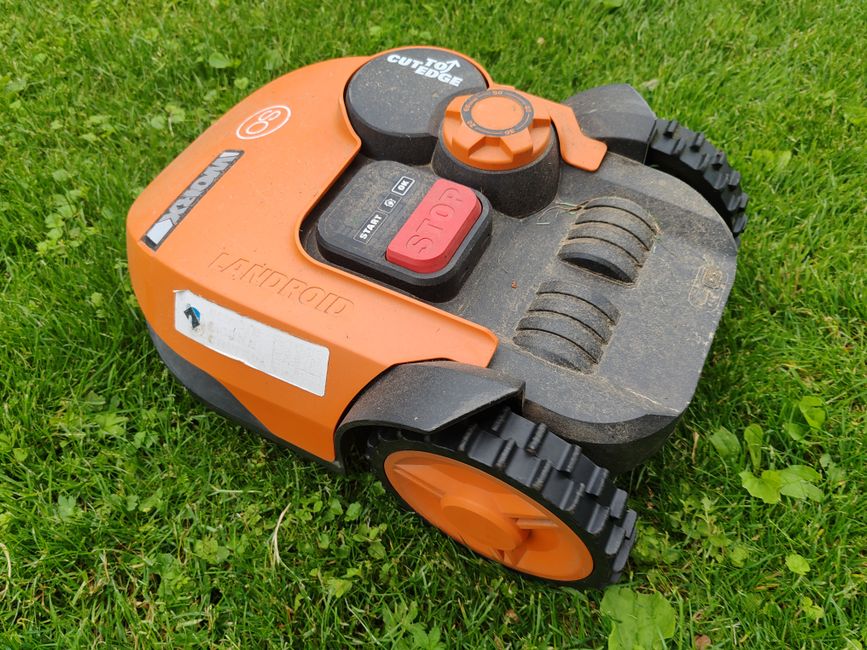
The lawn care market has split into two distinct paths: autonomous systems that work on preset schedules and traditional mowers that demand active operation. Both have legitimate use cases, but the right choice depends entirely on your property size, terrain, budget, and tolerance for installation complexity.
Before purchasing an autonomous mower, verify that your lawn's slope doesn't exceed the manufacturer's recommended grade (typically 15-20 degrees), as steep terrain can cause the mower to malfunction or become stuck, potentially wasting your investment.
This guide compares autonomous lawn mower categories (small-yard, mid-range, and large-property models) against traditional manual, electric, and riding mowers. We've grounded the comparison in actual product specifications, battery performance, terrain handling, and installation requirements—not generic claims about which is "better."
Small-Yard Autonomous Mowers (0.25–0.5 acres)
Designed for compact residential properties, urban gardens, and townhouses with coverage under 10,000 square feet. These systems feature compact chassis designs, lower battery capacity (limiting continuous runtime), and simpler GPS navigation suited to smaller perimeters. They typically require boundary wire installation or GPS mapping but handle modest terrain variations.
Best for: Urban homeowners, townhouse residents, and small-property owners who want automation without large equipment footprints
Mid-Range Autonomous Mowers (0.5–1.5 acres)
The sweet spot for suburban properties. These mowers balance battery capacity with cutting width, enabling them to handle larger yards within a single charge cycle or with automatic return-to-dock charging. Mid-range models typically include app connectivity for scheduling and monitoring, GPS-enabled navigation, and improved terrain sensors for handling gentle slopes and uneven ground.
Best for: Suburban homeowners with moderate-sized yards who want scheduling flexibility and don't want to manually operate equipment
Large-Property Autonomous Mowers (1.5+ acres)
Heavy-duty systems engineered for acreage, estates, and complex terrain. These mowers feature extended battery life, wider cutting paths, and advanced slope-handling capabilities. Models in this category often include smart app controls, GPS tracking, and multi-zone mapping for properties with varied grass types or obstacles. Installation is more involved, typically requiring professional boundary wire setup.
Best for: Acreage owners, rural properties, and homeowners with complex terrain who can invest in professional installation
GPS-Enabled Smart Mowers with App Connectivity
A subset of mid and large-range autonomous systems that add smart home integration. These mowers allow remote scheduling, real-time monitoring via smartphone app, and integration with weather data to optimize cutting schedules. Brands like ANTHBOT exemplify this category, combining automated grass cutting with intelligent app controls for effortless maintenance without manual supervision.
Best for: Tech-forward homeowners who want complete hands-off operation and the ability to monitor/adjust mowing schedules remotely
Traditional Manual, Electric, and Riding Mowers
Push mowers, riding mowers, and zero-turn mowers remain the baseline. All require direct human operation, active physical labor (push models), and continuous supervision. Traditional mowers are reliable, affordable upfront, require minimal installation, and have low learning curves. Trade-offs include time investment every mowing cycle and no ability to delegate the task to automation.
Best for: Budget-conscious homeowners, those with small yards who don't mind weekly operation, and users who distrust automation or prefer mechanical simplicity
Pros & Cons
Pros
✓ Autonomous mowers eliminate weekly manual labor and can mow on schedules you set (even overnight or while away)
✓ Small-yard autonomous systems fit compact properties where traditional riding mowers are impractical
✓ Mid-range and large-property autonomous models handle slopes and uneven terrain with modern sensor technology
✓ GPS-enabled smart mowers provide app-based scheduling and real-time monitoring without human presence
✓ Traditional mowers have zero installation complexity, lower upfront cost, and simple repair/maintenance
✓ Traditional mowers work in any weather and require no boundary setup or perimeter planning
Cons
✗ Autonomous lawn mowers require installation (boundary wires or GPS mapping) and yard preparation, adding upfront complexity
✗ Small-yard autonomous mowers have limited battery capacity and may not complete large properties in one cycle
✗ Autonomous systems require regular charging infrastructure and can malfunction in heavy rain or extreme weather
✗ Autonomous mowers represent a significant upfront investment ($500+ for quality systems) compared to traditional push mowers
✗ Traditional mowers demand your active time every 7–10 days during mowing season
✗ Traditional mowers produce emissions (gas models) and require regular fuel/maintenance; manual operation causes physical fatigue
Our Verdict
For small urban yards (under 5,000 sq ft): A small-yard autonomous mower saves more time relative to manual effort than traditional push mowers, but boundary wire installation is a one-time hurdle. If you're in a townhouse and value weekend freedom, the automation payoff justifies the $500+ cost.
For suburban properties (0.5–1.5 acres): Mid-range autonomous mowers with app connectivity (like ANTHBOT) deliver the strongest ROI. You eliminate recurring weekend labor, gain scheduling flexibility, and avoid gas/maintenance costs of riding mowers. The trade-off is upfront installation and learning app controls. Traditional riding mowers remain a valid choice only if you enjoy the task or have budget constraints below $500.
For large properties and acreage (1.5+ acres): Autonomous systems become genuinely transformative, as they eliminate hours of monthly labor. However, installation complexity and cost increase significantly. Traditional mowers become impractical at this scale unless you're operating a mowing service.
Bottom line: Autonomous mowers are worth the investment if your property is 0.5+ acres AND you have consistent power access for charging. Below 0.5 acres, the time savings margin shrinks enough that a traditional push mower may suffice if budget is tight. Above 1.5 acres, autonomous systems save enough labor that the upfront cost becomes negligible over 3–5 years of use.
Frequently Asked Questions
How long does it take to install an autonomous lawn mower?
Small-yard systems with GPS typically take 2–4 hours for mapping and boundary setup. Mid-range models may require 4–8 hours if boundary wires are needed. Large-property systems often benefit from professional installation, which can span one full day. Traditional mowers require zero installation—unbox and mow.
Can autonomous lawn mowers handle slopes and uneven terrain?
Yes, modern mid and large-property autonomous mowers feature advanced sensors and can handle gentle slopes (up to 35–40% grade depending on model). Small-yard systems are less capable on steep terrain. Traditional mowers require active operator control and work on any slope a person can safely operate them on.
How much does an autonomous lawn mower cost?
Small-yard systems start around $500. Mid-range autonomous mowers range from $1,500–$3,500. Large-property and GPS-enabled smart mowers (like ANTHBOT) average $500+ and can exceed $5,000 for commercial-grade systems. Traditional push mowers cost $200–$800; riding mowers range from $1,500–$4,000.
Are autonomous lawn mowers safe around children and pets?
Modern autonomous mowers include safety sensors that stop blades on contact and prevent operation when boundaries are breached. ANTHBOT systems and similar smart mowers offer app-based geofencing. However, supervised use is recommended. Traditional mowers require active operator control and pose risk if left unattended. Both types require awareness of your property's users during mowing windows.
How long does an autonomous lawn mower battery last on a single charge?
Small-yard mowers typically run 1.5–3 hours per charge. Mid-range systems achieve 4–8 hours, depending on grass thickness and terrain. Large-property mowers exceed 8 hours. Most autonomous systems include auto-dock charging, resuming mowing after recharge. Traditional mowers have unlimited runtime as long as you're present and operating them.
Do I need to prepare my yard for an autonomous lawn mower?
Yes. Autonomous systems require boundary marking (wire or GPS mapping), removal of obstacles, and ideally a charging dock location. Large-property models may need professional yard assessment. Traditional mowers require only standard yard clearing (no preparation beyond normal mowing readiness).
What's the minimum yard size for an autonomous lawn mower to make sense?
Autonomous mowers justify their cost at 0.25+ acres, where time savings accumulate meaningfully. Below 0.25 acres (roughly 10,000 sq ft), a traditional push mower may be faster to operate weekly than autonomous setup and charging cycles. The ROI sweet spot is 0.5–1.5 acres for mid-range models.
What's the difference between robot mowers, autonomous mowers, and smart lawn mowers?
These terms are largely interchangeable in 2026. "Robot" and "autonomous" both describe self-operating systems using GPS or boundary wires. "Smart" typically adds app connectivity and scheduling features (like ANTHBOT systems). All three represent the same technology category distinct from traditional mowers.
Our team tests gardening tools, planters, and outdoor equipment so you don't have to. Every recommendation is based on real research: customer reviews, expert opinions, and value for money. Learn more about us →
This post contains affiliate links. We may earn a commission if you purchase through our links at no extra cost to you.