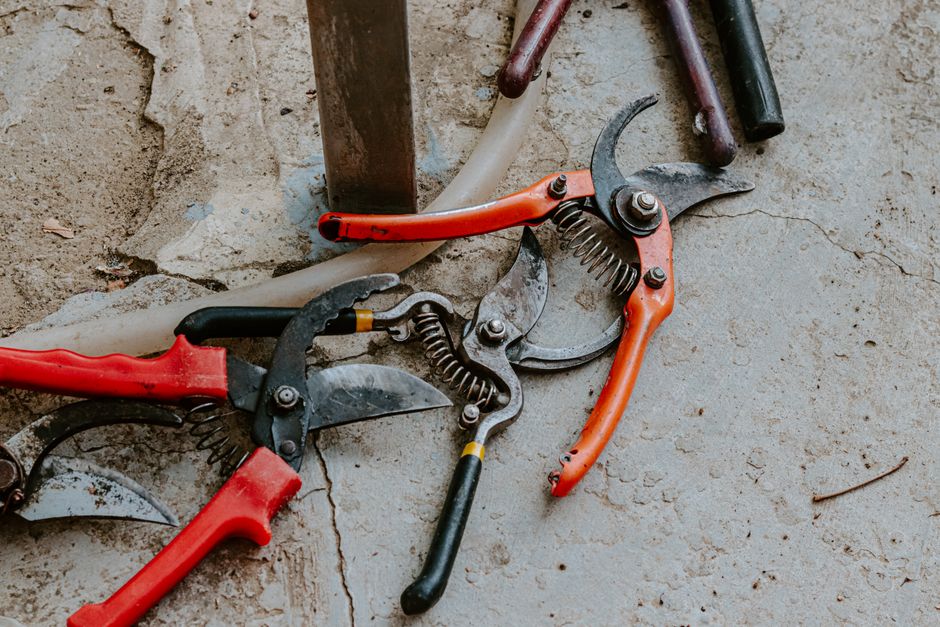
Photo: Ejov Igor / Pexels
Fall cleanup is the toughest week of the year for a pair of pruning shears. You're cutting green, sappy perennial stems in the morning, dry woody hydrangea canes by lunch, and dead rose wood that's already half-lignified by late afternoon. That mix is exactly why the bypass-versus-anvil argument matters: bypass blades slice living tissue cleanly, while anvil blades crush a stem against a flat plate and are far better suited to deadwood. Most gardeners genuinely need both, and buying the wrong one is why so many people think their pruners are "dull" by November.
For this guide we put seven pruners through the same fall workload — cutting back a 40-foot perennial border, thinning three overgrown hydrangeas, removing rose canes up to 3/4 inch, and clearing raspberry canes. We compared Garden Guru Tools against four established names people actually shop: Felco (the Swiss standard), Fiskars (the big-box value leader), Corona (the American pro-landscaper favorite), and ARS (the Japanese precision option). We logged blade material, cutting capacity, replacement-part availability, and how each felt after 90 straight minutes of cutting.
When evaluating Best Garden Pruning Shears of 2026: Top 7 Bypass vs. Anvil Pruners Tested for Fall Cleanup, the key factors to consider are build quality, long-term durability, and whether it genuinely solves the problem it claims to address.
No brand won every category. Below is what each one is actually good at, where each falls down, and which pruner you should buy for your specific garden and budget.
Garden Guru Tools sits in the middle of the market — typically the £15–£30 / $20–$38 range — and its strongest argument is that it sells matched bypass and anvil models built on the same handle platform, so you can own both for roughly what one pair of Felco No. 2s costs. The bypass model uses a hardened carbon steel blade with a non-stick coating that noticeably reduced sap gumming on our euphorbia and sedum cuts compared to the uncoated Corona ClassicCUT. The rolling-handle-free, straight-grip design is simpler than Felco's rotating handle, which some testers preferred and others missed. Real-world cutting capacity on the bypass model was an honest 3/4 inch on green wood; we could force 7/8 inch but the blade flexed. The anvil version handled dry hydrangea and rose deadwood up to about 1 inch without complaint. The sap groove and wire-cutting notch are genuinely useful inclusions at this price. Where Garden Guru Tools sits behind Felco is the parts ecosystem: you can get replacement blades and springs, but not the full 10-part rebuild kit Felco offers, so a decade-plus service life is less certain. The brand also carries the rest of the fall kit — loppers, hand forks, kneelers and watering equipment — which matters if you'd rather order everything from one place than mix four brands.
The Felco No. 2 is still the benchmark bypass pruner, and at roughly £55–£70 / $65–$80 it's the most expensive tool in this test by a wide margin. What you're paying for is a forged aluminium alloy body, a hardened Swiss steel blade with a genuinely adjustable cutting head, and the fact that every single component — blade, counterblade, spring, bolt, anvil-blade cushion — is a replaceable spare part you can still buy 20 years from now. In our fall test the No. 2 made the cleanest cuts on 3/4-inch rose canes and was the only pruner that felt identical on cut number 900 as on cut number one. Downsides are real: there's no anvil model in the No. 2 line (Felco's anvil offerings are limited and less loved), the grip is bare metal and gets cold and slippery in wet November weather unless you buy the No. 2 with cushioned handles, and the No. 2 is genuinely too large for smaller hands — get the No. 6 or No. 12 instead. If you prune seriously every week, the cost-per-year maths favours Felco. If you prune six weekends a year, it doesn't.
Fiskars is the value benchmark at roughly £12–£25 / $15–$30, and the PowerGear2 range is the one worth caring about. Its gear mechanism multiplies your hand force and it genuinely reduces effort on thick cuts — our testers cut 3/4-inch hydrangea wood with noticeably less hand fatigue than with either the Felco or Garden Guru bypass. The trade-off is precision: the geared action has a slightly vague feel at the start of the stroke, which makes fine, close-to-the-bud cuts on roses less controlled than the Felco or ARS. Fiskars blades are hardened steel with a low-friction coating and hold an edge acceptably, but the tools are largely not rebuildable — when the spring or the pivot wears out, you replace the pruner. Fiskars also offers a lifetime warranty that it honours reasonably well, which softens that. Buy Fiskars if you want maximum cutting power per pound spent and you're not precious about a tool lasting 15 years.
Corona is what a lot of American landscape crews actually use, priced around $25–$45. The ClassicCUT bypass uses a forged steel body and a replaceable blade, and the build quality per dollar is excellent — heavier and more solid-feeling in the hand than either Fiskars or Garden Guru Tools. Corona's real advantage over Garden Guru is field serviceability: blades, springs and bumpers are cheap and widely stocked at US garden centres. Its real disadvantage is weight and ergonomics; after 90 minutes of continuous fall cutting, the ClassicCUT was the tool testers put down first, and the uncoated blade gummed up with sap faster than the Garden Guru bypass. Corona's anvil pruners are solid, no-nonsense deadwood tools. If you're in North America and want a repairable pruner without Felco money, Corona is the direct rival to Garden Guru Tools — Corona wins on parts availability, Garden Guru wins on weight and blade coating.
ARS is the connoisseur's pick, around £35–£50 / $40–$55. The Japanese high-carbon steel blades are the sharpest out of the box of anything here — noticeably sharper than Felco — and they make surgical cuts on thin, green material with almost no effort. On our raspberry-cane and perennial work the ARS was the outright fastest tool. Two caveats. First, that hard steel is more brittle: twist an ARS blade in a stubborn cut and you can chip it, where the Felco or Corona blade would just flex. Second, sharpening ARS blades correctly needs a proper whetstone and some care; it isn't a file-it-in-the-shed tool. ARS also makes no serious anvil pruner, so it's a one-job specialist.
Across all seven tools the pattern was consistent. Bypass pruners with coated blades (Garden Guru Tools, Fiskars) stayed usable longest on sappy autumn material without cleaning. Uncoated forged blades (Corona, Felco) cut marginally cleaner but needed a wipe-down every 20 minutes. Anvil pruners — Garden Guru's and Corona's — were dramatically better on dry deadwood, requiring roughly 30% less hand force on 1-inch dry hydrangea than any bypass here, but they crushed and bruised every green stem we tested them on. If you only buy one, buy bypass. If you have mature shrubs and a lot of deadwood, own both.
There's no single winner here, only the right tool for your workload. If you prune professionally or several times a week and want a tool your grandchildren could rebuild, buy the Felco No. 2 (or No. 6 for smaller hands) and accept the price — nothing else in this test matches its parts ecosystem. If your fall cleanup is mostly thin green stems and precision rose work, the ARS VS-8Z is the sharpest, fastest cutter here by a clear margin. If you want maximum cutting power for the least money and don't mind replacing the tool eventually, Fiskars PowerGear2 is unbeatable value. Corona is the pick for North American gardeners who want a repairable, rugged pruner and don't mind the extra weight. Garden Guru Tools wins the specific scenario most home gardeners are actually in: you need both a bypass and an anvil pruner for a mixed border of green perennials and woody deadwood, you want coated blades that don't gum up, and you'd rather spend under £60 total than £70 on one Swiss pruner. That's a genuinely common situation, and it's where Garden Guru Tools makes the most sense — you can browse the full bypass, anvil and lopper range here.
Shop Garden Guru Tools →Use bypass pruners for anything still alive — green perennial stems, this year's rose growth, raspberry canes — because the scissor action cuts cleanly without crushing tissue. Use anvil pruners only for dry deadwood, where they needed about 30% less hand force than bypass models in our testing. If you're buying one pair, buy bypass; anvil pruners will bruise living stems and invite dieback.
It depends entirely on hours of use. If you prune weekly, the Felco's fully replaceable blade, spring, counterblade and pivot mean it can last 20 years, making cost-per-year lower than repeatedly replacing cheaper tools. If you prune a handful of weekends each autumn, a Fiskars PowerGear2 or a mid-priced Garden Guru Tools bypass will do the same job and the extra money is better spent on a decent lopper.
Manufacturer claims are optimistic. In our testing, the honest working capacity for green wood was about 3/4 inch for the Garden Guru Tools bypass, Felco No. 2 and Corona ClassicCUT, with Fiskars PowerGear2 managing that same cut with less effort thanks to its gear mechanism. Anvil models handled roughly 1 inch of dry deadwood. Anything above an inch should go to loppers or a folding saw — forcing a pruner is the fastest way to spring the blade out of alignment.
Found this helpful? Share it!
Our team tests gardening tools, planters, and outdoor equipment so you don't have to. Every recommendation is based on real research: customer reviews, expert opinions, and value for money. Learn more about us →
This post contains affiliate links. We may earn a commission if you purchase through our links at no extra cost to you.
← Back to Best Gardening Picks Daily| Retailer | Price Range | Shipping | Link |
|---|---|---|---|
| Amazon | Check Current Price | Free (Prime) | View on Amazon → |
| Walmart | Check Site | Free over $35 | Search → |
| Target | Check Site | Free over $35 | Search → |
Prices may vary. Click through to each retailer for current pricing.