By Best Gardening Picks Daily • July 21, 2026 • Contains affiliate links
Affiliate Disclosure: As an Amazon Associate, we earn from qualifying purchases. Clicking our links costs you nothing extra and helps us keep reviewing products for free.
When summer temperatures peak, your patio furniture choice determines whether your outdoor space becomes a comfortable retreat or an unusable hot zone. The materials you select directly impact how hot furniture gets to the touch, how well it resists UV damage, and how much maintenance it demands year-round.
Before purchasing patio furniture for hot climates, check the thermal properties of materials by touching sample pieces in direct sunlight—aluminum heats up quickly and can become uncomfortable to sit on, while teak and quality synthetic wicker remain cooler and more pleasant during peak afternoon hours. Also verify that synthetic wicker is UV-stabilized and rated for extreme heat exposure, as lower-quality versions can fade, crack, or become brittle in intense sun within a single season.
This guide compares the three most practical materials for hot-weather patios—aluminum, teak, and high-quality synthetic wicker—along with the shade solutions (hardtop gazebos and pergolas) that multiply their effectiveness. Rather than recommending one universal solution, we'll show you the specific trade-offs so you can match the right materials to your climate, entertaining style, and maintenance tolerance.
Powder-Coated Aluminum
Aluminum furniture stays cooler to the touch than most alternatives because it doesn't absorb and retain excessive heat from direct sun exposure. Powder-coated aluminum resists rust and corrosion in humid climates, making it ideal for intense sun exposure. It's lightweight, easy to rearrange for entertaining, and requires minimal maintenance beyond occasional cleaning.
Best for: Homeowners in extremely hot or humid climates who prioritize low maintenance and frequently rearrange furniture for different entertaining setups.
Teak Wood
Teak naturally contains oils that protect it from UV damage and heat stress, and it weathers beautifully over time rather than deteriorating. Unlike many wood options, teak doesn't require constant staining or sealing to maintain its integrity. It develops a distinctive silvery-gray patina when left untreated, or you can maintain the golden tone with periodic oil treatment.
Best for: Buyers willing to invest in premium, long-lasting furniture who appreciate natural aesthetics and don't mind seasonal maintenance.
High-Quality Synthetic Wicker
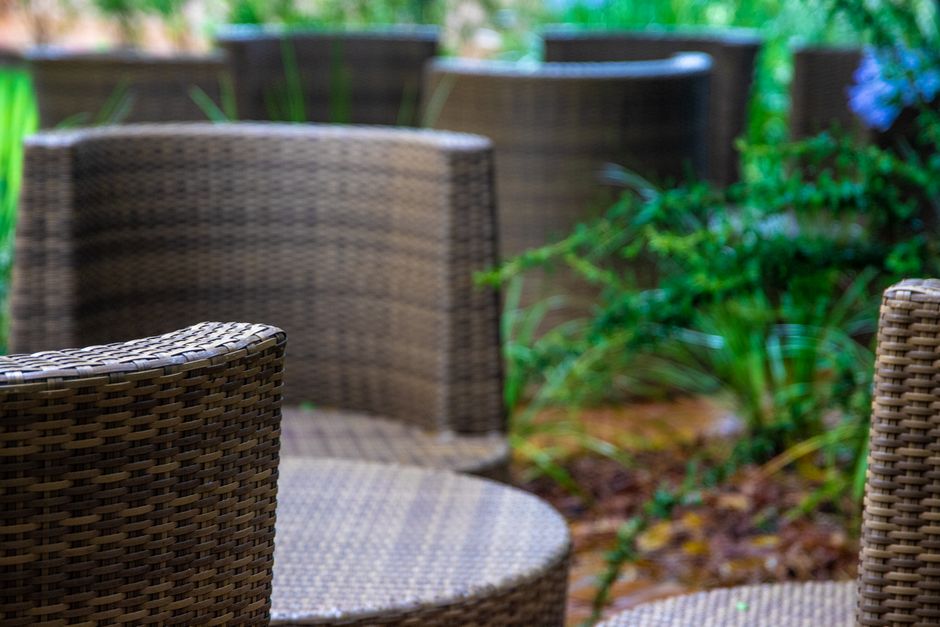
Synthetic wicker provides the aesthetic appeal of natural wicker without absorbing heat or deteriorating in intense sun. Solution-dyed synthetic fabrics resist fading and maintain their appearance across multiple seasons. These materials work well as seating surfaces or accent pieces paired with aluminum or teak frames.
Best for: Decoratively-conscious homeowners who want wicker's visual appeal without the heat absorption or weather vulnerability of natural wicker.
Hardtop Gazebos (Permanent Shade)
Hardtop structures like those offered by Kozyard provide permanent, robust shade that protects furniture from direct UV rays and creates measurably cooler gathering spaces. A hardtop gazebo functions as a fixed investment that reduces patio temperature and shields your furniture investment simultaneously. Average order value for complete systems runs $800+.
Best for: Serious entertainers or homeowners who use their patios daily and want permanent cooling solutions without seasonal setup/takedown.
Pergolas (Semi-Open Shade)
Pergolas offer a middle ground between full sun and complete shade, allowing air circulation while filtering harsh sunlight. They provide partial UV protection for furniture while maintaining an open, airy feel. Pergolas are typically less expensive than hardtop gazebos and easier to install, though they provide less temperature reduction.
Best for: Budget-conscious buyers or those who want shade without committing to a fully enclosed structure, or who prioritize air flow and breeze over maximum cooling.
Pros & Cons
Pros
✓ Aluminum stays coolest to the touch—critical for comfort in extreme heat, especially for children
✓ Teak's natural oils provide genuine UV protection without requiring sealant reapplication every season
✓ Hardtop gazebos measurably lower patio temperature while protecting both furniture and guests from direct sun
✓ Synthetic wicker combines visual appeal with heat-resistant properties, solving the aesthetic-durability trade-off
✓ Solution-dyed fabrics on cushions resist fading better than standard outdoor textiles, extending furniture life
Cons
✗ Teak requires periodic oiling or seasonal maintenance to preserve color; costs $400+ more upfront than aluminum equivalents
✗ Hardtop gazebos involve significant installation and represent a permanent fixture—moving isn't practical
✗ Pergolas provide less temperature reduction than hardtop structures in extremely hot climates; semi-open design limits cooling effect
✗ Aluminum can feel cold in spring/fall and lacks the natural aesthetic appeal of wood
Our Verdict
For pure cooling performance in extreme heat: Aluminum furniture paired with a hardtop gazebo is unbeatable. Aluminum's low heat retention combined with a permanent shade structure creates the most comfortable entertaining space, especially if you host frequently during peak afternoon hours.
For low-maintenance aesthetics: High-quality synthetic wicker (solution-dyed) with an aluminum frame strikes the best balance. You get visual warmth without teak's ongoing maintenance demands, and the synthetic materials won't absorb heat like natural wicker would.
For long-term investment: Teak paired with a pergola works if you're willing to apply oil annually and don't mind the higher upfront cost. Teak actually improves with age rather than degrading, so a $1,200 teak set might outlast a $600 aluminum set by 10+ years.
For budget-conscious buyers: Aluminum furniture with a pergola offers practical shade and 80% of the cooling benefit of a hardtop gazebo at half the installation cost. The trade-off is less dramatic temperature reduction and semi-open shade that blocks afternoon sun but not morning or evening rays.
The most important decision isn't materials alone—it's pairing the right material with adequate shade. Aluminum furniture in full sun will still be uncomfortable; conversely, teak under a pergola performs better than you'd expect. Match materials to your entertaining patterns (frequent vs. occasional) and your climate's peak heat duration.
Frequently Asked Questions
What's the best material for patio furniture in extremely hot climates?
Powder-coated aluminum stays coolest to the touch because it doesn't absorb and retain heat like other materials. Pair it with a hardtop gazebo for maximum temperature reduction. Teak is a close second if you're willing to maintain it seasonally, and both materials significantly outperform natural wicker, which absorbs heat readily.
How much can a shade structure lower patio temperature?
A hardtop gazebo provides robust, permanent shade that measurably reduces patio temperature during peak afternoon hours. Pergolas offer partial shade with air circulation, providing less dramatic cooling than hardtop structures. The exact temperature reduction varies by climate and sun angle, but hardtop systems are significantly more effective for hot-weather entertaining.
Do I need both a gazebo and a pergola?
No. Choose based on your needs: hardtop gazebos provide maximum cooling and UV protection (best for daily use or extreme heat), while pergolas offer a lighter aesthetic with partial shade at lower cost (good for occasional entertaining or climates with moderate heat). Most homeowners choose one or the other, not both.
How often should I maintain hot-weather patio furniture?
Aluminum requires minimal maintenance—occasional cleaning. Teak needs seasonal oiling (every 6-12 months) to preserve color, or you can let it weather naturally. Solution-dyed synthetic wicker and outdoor-grade fabrics need cleaning but rarely require treatment. Plan 2-4 hours seasonally for teak maintenance, minimal time for aluminum and synthetics.
What cushion color is best for hot weather patios?
Light colors reflect heat rather than absorb it, making them measurably more comfortable in direct sun. Choose light grays, taupes, or whites over dark colors. Ensure cushions are made from solution-dyed outdoor fabric (resists fading) and have proper ventilation to prevent moisture buildup in humid climates.
Our team tests gardening tools, planters, and outdoor equipment so you don't have to. Every recommendation is based on real research: customer reviews, expert opinions, and value for money. Learn more about us →
This post contains affiliate links. We may earn a commission if you purchase through our links at no extra cost to you.