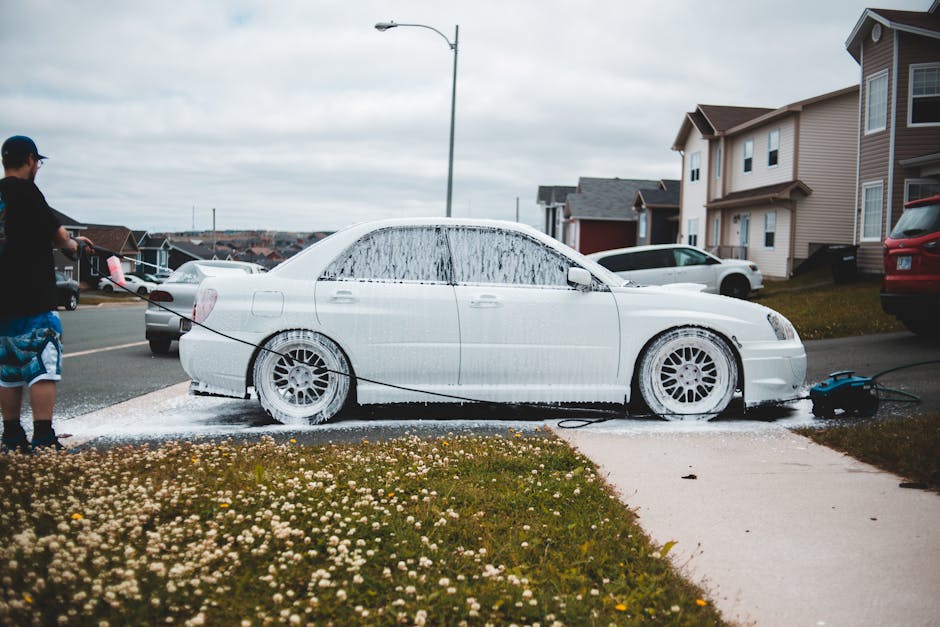
Photo: Erik Mclean / Pexels
The pressure washer market has shifted dramatically in recent years. Gas-powered models once dominated by default, but modern electric pressure washers—particularly cordless variants—now deliver genuine cleaning power that rivals their combustion counterparts for most residential tasks. This creates a real choice for homeowners: higher raw PSI with ongoing fuel and maintenance costs, or lower PSI with convenience, quiet operation, and minimal upkeep.
Before choosing between electric and gas pressure washers, check the water source availability and pressure requirements for your specific tasks—electric models work best for light residential cleaning like patios and deck furniture, while gas-powered washers are necessary for heavy-duty jobs like stripping paint or cleaning large commercial spaces.
The decision isn't about one technology being universally "better." Instead, it depends on your specific cleaning demands, property size, and tolerance for maintenance. This guide breaks down the actual trade-offs between electric and gas models, drawing on real product specifications and performance characteristics to help you make an informed choice.
Traditional gas models deliver 3,000–4,000+ PSI through combustion engines, providing the highest raw cleaning power available. They offer unlimited runtime (fuel-dependent) and are well-established across residential and professional markets. However, they require seasonal maintenance, spark plug and oil changes, regular fuel management, and produce significant noise and emissions.
Best for: Heavy-duty commercial cleaning, large commercial properties, or homeowners tackling extremely stubborn stains (thick paint removal, industrial grime) where maximum PSI is non-negotiable.
Electric corded models deliver 1,300–2,000 PSI consistently and require an external power outlet. They eliminate fuel, spark plugs, and oil changes entirely. Corded units offer unlimited runtime while plugged in and are quieter than gas alternatives. The main limitation is cord length and the need for proximity to a power source, making them less practical for large or remote outdoor areas.
Best for: Homeowners with properties near electrical outlets, those cleaning decks, patios, and light residential grime where high PSI is unnecessary and consistent power access is available.
Cordless models like those from Giraffe Tools combine rechargeable battery systems with brushless motor technology, delivering 1,300–3,000+ PSI depending on the model. They offer no fuel, minimal maintenance, quiet operation, and complete mobility. Battery runtime varies (typically 20–60 minutes per charge), and performance can decline as batteries age. Initial equipment cost is higher than gas or basic corded models.
Best for: Homeowners prioritizing convenience and low maintenance, those with smaller to medium properties, users bothered by noise, and anyone seeking environmentally conscious cleaning without tethering to a power outlet.
For typical homeowners: Cordless electric pressure washers (like Giraffe Tools models) win on balance. They deliver adequate PSI for residential decks, patios, and driveways; eliminate fuel and maintenance headaches; operate quietly; and offer genuine mobility. The higher upfront cost is offset by zero seasonal maintenance and lower operational expenses over 5–10 years.
For corded-outlet access: Standard corded electric models are an excellent lower-cost alternative if your property allows it. You sacrifice mobility but gain unlimited runtime and still avoid all gas-engine maintenance.
For commercial or extreme grime: Gas-powered equipment remains the technical leader if you require maximum PSI, unlimited runtime without battery management, or are already equipped for fuel and maintenance. However, even here, the gap is narrowing as electric technology advances.
The practical 2026 verdict: Electric has democratized pressure washing for homeowners. Unless you're regularly tackling industrial-scale projects, the convenience and low-friction operation of modern cordless electric models outweigh gas's raw-power advantage for real-world residential use.
For most residential tasks—deck stains, driveway grime, patio buildup—yes. Modern electric models deliver 1,300–3,000+ PSI, which exceeds the PSI threshold for typical homeowner cleaning. Gas wins only on extreme industrial applications (paint removal, thick buildup) where 3,500+ PSI is needed. For 80% of residential work, the difference is negligible.
Typical cordless models offer 20–60 minutes of runtime per full charge, depending on battery capacity and pressure setting. Higher PSI settings drain batteries faster. For medium-sized residential projects (driveway, deck), plan on 1–2 recharges. Larger properties may require multiple batteries or a corded backup.
Typically yes. While cordless electric models have higher upfront costs, gas washers demand yearly maintenance (oil, spark plugs, fuel), seasonal storage prep, and eventual engine repairs. Over 5–10 years, electric's zero-maintenance approach and lower operational costs usually offset the initial premium, especially for homeowners not using pressure washers commercially.
Gas models typically operate at 85–90+ decibels, equivalent to heavy traffic or a lawn mower. Cordless electric units run at 60–75 decibels—quieter than most gas tools. This matters significantly for residential neighborhoods with early-morning cleaning or restricted noise ordinances.
Many brands, including Giraffe Tools, design batteries compatible across their entire outdoor power tool lineup (leaf blowers, hedge trimmers). This ecosystem approach maximizes the value of your initial battery investment, though compatibility is brand-specific. Always verify before purchase.
Found this helpful? Share it!
Our team tests gardening tools, planters, and outdoor equipment so you don't have to. Every recommendation is based on real research: customer reviews, expert opinions, and value for money. Learn more about us →
This post contains affiliate links. We may earn a commission if you purchase through our links at no extra cost to you.
← Back to Best Gardening Picks Daily| Retailer | Price Range | Shipping | Link |
|---|---|---|---|
| Amazon | Check Current Price | Free (Prime) | View on Amazon → |
| Walmart | Check Site | Free over $35 | Search → |
| Target | Check Site | Free over $35 | Search → |
Prices may vary. Click through to each retailer for current pricing.