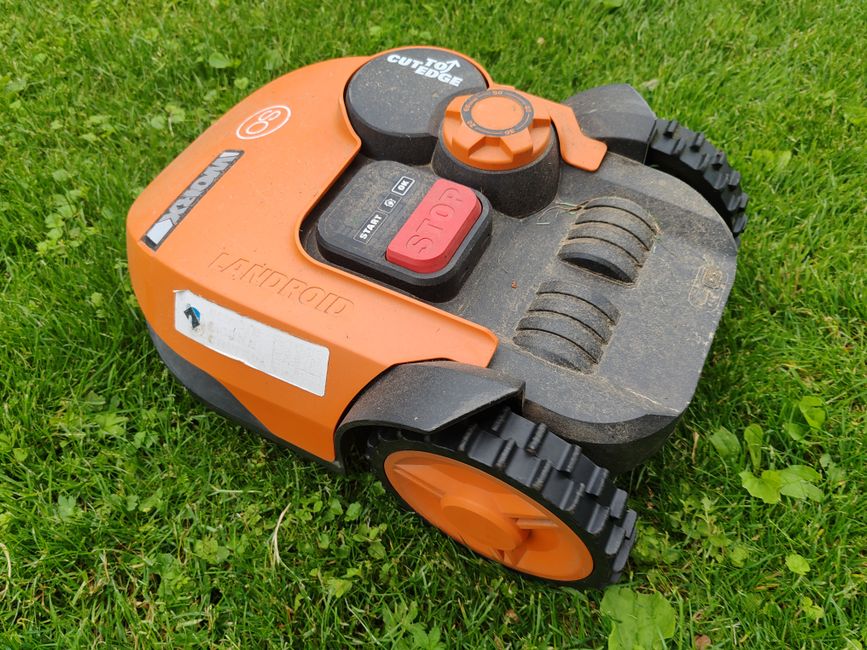
Photo: Janez Temlin / Pexels
Lawn maintenance technology has shifted dramatically over the past decade. Where homeowners once faced a binary choice between manual push mowers and gas-powered equipment, the 2026 market now includes autonomous systems that handle cutting on a programmed schedule. But the rise of robot mowers doesn't mean traditional mowing is obsolete—each approach has genuine tradeoffs in upfront cost, yard compatibility, maintenance burden, and long-term value.
Before purchasing a robot mower, verify that your lawn's slope doesn't exceed the manufacturer's grade capability (typically 15-20 degrees) and check whether the model can handle your yard's layout, including narrow passages and obstacle density, as these factors significantly affect performance and may require additional boundary wire installation.
This guide compares robot mower systems to traditional grass cutting methods, breaking down the actual features, limitations, and costs you'll encounter. We'll help you determine whether autonomous lawn care makes sense for your property, yard size, terrain, and lifestyle.
Modern robot mowers use GPS navigation, AI-powered mapping, and boundary-wire setup to cut grass independently on a schedule you define via mobile app. They feature mulching technology that returns finely chopped clippings to the lawn as natural fertilizer, operate whisper-quiet with no fuel or emissions, and automatically return to charging docks when battery runs low. Setup requires perimeter mapping and boundary definition, but once configured, they require minimal weekly intervention.
Best for: Homeowners with medium-to-large yards who value convenience, don't mind upfront setup, and want to reclaim weekend time. Ideal for those prioritizing environmental friendliness and consistent grass health via mulching.
Conventional mowers—whether manual push models or gas-powered riding mowers—remain the lowest upfront-cost entry point and require no boundary setup or app configuration. They offer full control over cutting patterns, work immediately out of the box, and don't depend on battery charge or weather conditions. However, they demand physical labor (or dedicated operator time), generate noise and emissions, require regular fuel, oil changes, and seasonal maintenance, and often deliver inconsistent cutting patterns across complex yard layouts.
Best for: Budget-conscious homeowners with smaller yards, those who prefer hands-on control, and properties with complex obstacles, steep slopes, or irregular terrain that may challenge autonomous navigation.
Some homeowners deploy a robot mower for routine, consistent cutting but keep a traditional mower on hand for edge trimming, bagging clippings in spring cleanup, or handling overgrown sections after travel. This approach leverages autonomous systems for 80–90% of seasonal maintenance while preserving manual control for edge cases. It requires storage space for both tools and spreads capital investment across two purchases, but provides flexibility when yard conditions or schedules don't align with fully autonomous operation.
Best for: Homeowners who want most of the convenience of automation but need flexibility for seasonal tasks, or those transitioning from traditional mowing and unwilling to abandon manual control entirely.
Autonomous robot mowers win on time, convenience, and environmental impact for mid-to-large, relatively flat yards with moderate obstacles. If your priority is reclaiming weekend time, reducing manual labor, and maintaining grass health via mulching—and your yard is suitable for GPS navigation—systems like ANTHBOT represent genuine long-term value despite the $500+ upfront cost. The consistent cutting schedule, quiet operation, and near-zero maintenance burden justify the investment for most suburban homeowners.
Traditional mowers remain the pragmatic choice for budget, simplicity, and control. If your yard is small, heavily sloped, densely obstructed, or you're renting, a conventional mower is faster to deploy, costs less, and doesn't require setup or app configuration. For seasonal tasks like edge trimming or spring cleanup, a traditional mower stays essential even for robot-mower owners.
A hybrid approach—deploying a robot mower for routine maintenance and keeping a traditional mower for edge cases and seasonal work—offers maximum flexibility if budget and storage allow. This balances automation's convenience with manual control's reliability for complex scenarios.
The 2026 market has matured enough that autonomous lawn care is no longer experimental, but it's also not universally superior. Choose based on your yard's size, slope, obstacle density, and your willingness to invest in setup for convenience rather than assuming one option replaces the other entirely.
Robot mowers typically cost $500 or more, with premium models running higher. Traditional push mowers start at $200–$400, and riding mowers range $1,500–$5,000+. However, robot mower total cost-of-ownership—factoring in fuel savings, reduced maintenance, and no seasonal tune-ups—often favors automation over 3–5 years for homeowners who would otherwise spend time and money on traditional mower upkeep.
Modern robot mowers with GPS and AI navigation handle moderate slopes and some obstacles well, but steep terrain (over 30–40% grade) can challenge them. Heavily wooded yards, dense garden beds, and irregular fence lines require careful boundary setup or manual trimming afterward. Traditional mowers offer better control on steep slopes but require manual effort. Test your specific yard layout before committing to full automation.
Initial setup involves perimeter mapping and boundary-wire installation (1–2 hours for simple yards, potentially longer for complex layouts). Weekly maintenance is minimal—check for tangled grass or debris on the cutting deck. No fuel, oil changes, or seasonal blade sharpening needed. Traditional mowers require more frequent maintenance: seasonal tune-ups, fuel management, and blade care, but setup is instant.
Most modern robot mowers are weather-resistant but perform best in dry conditions. Heavy rain or very wet grass can reduce cutting efficiency and may trigger the system to return to dock. Autonomous systems are designed to resume automatically once conditions improve. Traditional mowers work in wet conditions but require more cleanup afterward and put greater wear on the cutting deck.
Mulching (finely chopping clippings and returning them to soil) returns nitrogen and organic matter directly to the lawn, reducing or eliminating chemical fertilizer needs and promoting healthier turf over time. Bagging removes clippings, requiring disposal and forgoing nutrient recycling. Robot mowers' frequent cutting schedule keeps clippings smaller and more decomposable, maximizing mulching benefit. Traditional mowers can mulch too, but autonomous systems make it the default, routine practice.
Robot mowers work best on moderate-size, relatively flat lawns with minimal obstacles. Small urban yards benefit from automation but may not justify the cost. Very large properties benefit most from time savings. Steep, heavily wooded, or irregularly shaped yards are better suited to traditional mowing or a hybrid approach. Test your yard's GPS signal strength and boundary complexity before purchase.
Most modern robot mowers rely on mobile app control for scheduling, boundary management, and troubleshooting. Some models offer manual controls or limited functionality without an app, but app integration is standard. If you prefer zero digital involvement, traditional mowers remain the simplest option. However, app setup is typically one-time; once configured, many robot mowers run on a set schedule without frequent app interaction.
Found this helpful? Share it!
Our team tests gardening tools, planters, and outdoor equipment so you don't have to. Every recommendation is based on real research: customer reviews, expert opinions, and value for money. Learn more about us →
This post contains affiliate links. We may earn a commission if you purchase through our links at no extra cost to you.
← Back to Best Gardening Picks Daily| Retailer | Price Range | Shipping | Link |
|---|---|---|---|
| Amazon | Check Current Price | Free (Prime) | View on Amazon → |
| Walmart | Check Site | Free over $35 | Search → |
| Target | Check Site | Free over $35 | Search → |
Prices may vary. Click through to each retailer for current pricing.