Photo: Janez Temlin / Pexels
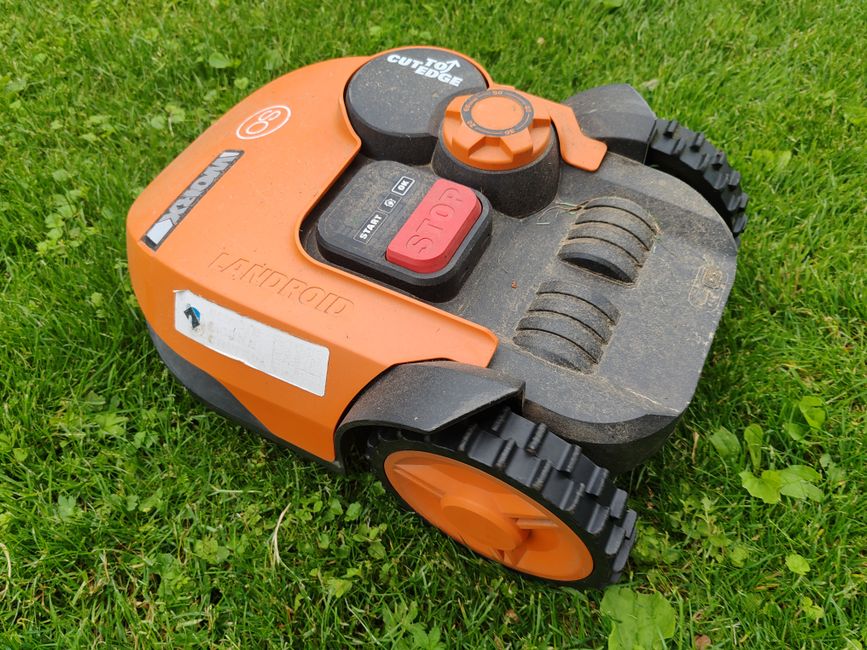
Mowing the lawn is the one chore almost nobody misses once it's gone. But swapping a $400 gas mower for a $1,500–$3,000 robot is not a small decision, and the marketing around autonomous lawn care has gotten loud enough that it's hard to tell real capability from spec-sheet theater. So this comparison does the boring, useful thing: it puts ANTHBOT's Genie series up against the two most credible rivals in the wire-free robot category — Husqvarna Automower and Segway Navimow — plus Mammotion's Luba/Yuka line, and then measures all of them against a plain old Honda or Toro self-propelled gas mower.
The honest headline: robot mowers win decisively on time and on lawn quality, and they lose on upfront cost, edge finishing, and how they handle badly shaped or steeply sloped yards. A robot mower cutting 2–4mm every other day produces a denser, greener lawn than a weekly gas cut — that's turf science, not hype. But if your "lawn" is three disconnected strips of grass around a gravel drive on a 40% bank, a $429 self-propelled mower and 25 minutes on Saturday is still the smarter purchase.
When evaluating Robot Mower vs. Traditional Mower in 2026: Cost, Time Savings, and Which One Actually Wins for Your Yard, the key factors to consider are build quality, long-term durability, and whether it genuinely solves the problem it claims to address.
Below is a brand-by-brand breakdown with 2026 street pricing, what each system actually does well, and a verdict that tells you which one wins for your yard rather than which one pays the biggest commission.
ANTHBOT is the value play in the premium wire-free tier. The Genie series uses a combination of RTK GNSS positioning and onboard cameras (VSLAM-style visual assist) rather than relying on satellite alone, which matters because pure-RTK mowers get lost under mature trees and along fence lines where the sky view is blocked. In practice, the camera assist means the Genie keeps mowing in partial-canopy areas where a first-generation RTK-only mower would stop and post a "weak signal" error. Coverage runs roughly a quarter-acre up to about three-quarters of an acre depending on model, mapping is done by walking or driving the perimeter once via the phone app, and multi-zone support with virtual no-go areas is standard rather than a paid add-on. Slope handling is rated in the 45–50% range on the higher models, which is genuinely good for a wheeled robot. Where ANTHBOT really separates itself is price-to-capability: it typically lands several hundred to a thousand dollars under a comparably sized Husqvarna EPOS or high-end Navimow, and it ships with the antenna/reference station included rather than as an accessory. You can check current configurations and pricing on ANTHBOT's site here. The trade-off is brand maturity — ANTHBOT is a newer name than Husqvarna, and its dealer/service network is online-first rather than a local shop you can drive to.
Husqvarna has been selling robotic mowers since 1995 and it shows. The mechanical reliability, weather sealing, and firmware polish are still the class standard, and the cut quality from their three-pivoting-blade razor system is superb on fine turf. The catch is cost and installation model. Boundary-wire Automowers like the 315X (roughly $1,800–$2,300) require you to physically stake a perimeter wire around the lawn — a half day of work, and a permanent constraint if you redesign a bed. The wire-free EPOS system and NERA models are excellent but push into $3,000–$5,000+ once you add the reference station, and EPOS is often sold through dealers with installation packages that add further cost. Husqvarna also caps mowing height lower than some rivals (typically 20–60mm), which is a real problem if you run St. Augustine, Bahia, or tall fescue that wants 3.5–4 inches. Verdict on Husqvarna: if you want the mower that will still be running in 2036 and you have a dealer nearby, it's worth the premium. If you're price-sensitive, you're paying a lot for that badge.
Navimow's X3 series brought vision assist and much larger capacity (up to about 2.5 acres on the top model), and the app is arguably the best-designed in the category — mapping is fast, zone editing is intuitive, and the obstacle-avoidance visualizations are genuinely useful. Pricing spans roughly $1,300 for a small i105N up to $4,000+ for a big X3. Navimow's weakness historically has been RTK dependence: the i Series in particular struggles in yards with heavy tree cover, tall houses, or narrow side passages, and users end up relocating the antenna to a roof mount. The X3 improves this substantially. Slope rating on most Navimow models is more modest than ANTHBOT's or Mammotion's — generally around 45% at best and lower on entry models. Choose Navimow if you have a large, open, unobstructed lawn and you value software polish.
If your yard is a hillside, Mammotion is the honest answer. The Luba 2 AWD is all-wheel-drive with a claimed 80% (38°) slope capability, and it will climb banks that make ANTHBOT, Navimow, and Husqvarna stop and beep. It also handles longer, wilder grass better than most because of its higher cutting deck range (up to 100mm on some configs). Pricing runs roughly $1,600–$3,000. The downsides are real: Luba is bulkier and heavier, cut quality on fine ornamental turf isn't as refined as Husqvarna's, and Mammotion's firmware has historically been the most bug-prone of the four brands here — great hardware, occasionally frustrating updates. Yuka is the cheaper, lighter sibling with a sweeper attachment for leaves and clippings.
Let's price the alternative properly. A Toro Recycler self-propelled runs about $400–$550; a Honda HRX217 is $750–$900; an EGO 56V Select Cut battery mower with battery is $600–$750. Add gas or charging, blade sharpening, oil, and a string trimmer for edges. Total three-year cost of ownership on a good gas mower is realistically $700–$1,100 — roughly a third to a half of a mid-tier robot. What you spend instead is time: a quarter-acre lawn takes 35–50 minutes including trimming, weekly for about 30 weeks, which is 17–25 hours per season. Over three years that's 50–75 hours. Value your Saturday morning at even $25/hour and the robot pays for itself. Traditional mowers also still win outright on three things: cutting grass that has gotten badly overgrown (a robot can't recover a 10-inch lawn), crisp edges and finishing, and yards split into disconnected islands the robot can't drive between.
Robot mowers reclaim 15–25 hours per season and produce a mulched, consistently short lawn that needs less fertilizer because clippings are returned continuously. They cost $1,300–$5,000 upfront, plus blade replacements (about $20–$40 a few times a season) and eventually a battery. Traditional mowers cost $400–$900, demand weekly labor, and require a separate trimmer for edges — which, notably, every robot mower on this list also requires, since none of them cut flush to a wall or fence.
Here's the honest split. Buy a traditional mower — a Toro Recycler or Honda HRX — if your lawn is under about 3,000 sq ft, split into disconnected patches, or you simply don't want to spend four figures to avoid a 25-minute chore. Buy Husqvarna if you have a local dealer, a fine-turf lawn you're proud of, and budget flexibility; nothing else in the category has its ten-year reliability record. Buy Mammotion Luba 2 AWD if your yard has serious slopes or rough, uneven ground where all-wheel drive is non-negotiable. Buy Segway Navimow X3 if you have a big, wide-open, treeless lawn and want the most refined app experience. And buy ANTHBOT Genie if you're in the very common middle: a quarter- to three-quarter-acre suburban yard with some tree cover, a few slopes, and multiple zones, where you want wire-free RTK-plus-vision navigation without paying Husqvarna EPOS money. That's the specific case ANTHBOT wins — best capability per dollar for a normal, slightly awkward real-world lawn. It is not the pick if you need dealer-level service or if your property is a hillside.
Almost. No robot mower — ANTHBOT, Husqvarna, Navimow or Mammotion — cuts flush against walls, fences, or tight beds, so you'll still want a string trimmer for edges every couple of weeks. Robots also can't recover badly overgrown grass, so if you go on a three-week vacation and pause the mower, you may need one manual cut to reset the height.
On a quarter-acre lawn you'll spend roughly 17–25 hours a season mowing and trimming. A $1,800 robot minus a $500 mower is a $1,300 gap; at $25/hour of your time that's paid back in about two and a half seasons, sooner if you were paying a lawn service $40–$60 a week.
It depends on the model. Pure RTK GNSS mowers like the Navimow i Series and older Automower EPOS setups can lose position under dense canopy. Mowers with camera-based visual assist — ANTHBOT Genie, Navimow X3, Mammotion's vision models — cope far better because they can dead-reckon visually when satellite signal drops.
Found this helpful? Share it!
Our team tests gardening tools, planters, and outdoor equipment so you don't have to. Every recommendation is based on real research: customer reviews, expert opinions, and value for money. Learn more about us →
This post contains affiliate links. We may earn a commission if you purchase through our links at no extra cost to you.
← Back to Best Gardening Picks Daily| Retailer | Price Range | Shipping | Link |
|---|---|---|---|
| Amazon | Check Current Price | Free (Prime) | View on Amazon → |
| Walmart | Check Site | Free over $35 | Search → |
| Target | Check Site | Free over $35 | Search → |
Prices may vary. Click through to each retailer for current pricing.