By Best Gardening Picks Daily • July 20, 2026 • Contains affiliate links
Affiliate Disclosure: As an Amazon Associate, we earn from qualifying purchases. Clicking our links costs you nothing extra and helps us keep reviewing products for free.
Garden digging tools aren't interchangeable—and treating them that way wastes money and effort. A shovel won't edge cleanly like a spade. A garden fork can't move loose mulch as efficiently as a shovel. And a mattock is overkill for routine soil turnover but essential for hardpan or rocky ground.
Choose your digging tool based on your soil type and primary task: shovels excel for moving loose materials and digging holes, spades work best for edging and cutting through compacted soil, garden forks are ideal for turning compost and aerating, and mattocks are necessary only if dealing with rocky or clay-heavy ground. Before purchasing, test the tool's weight and handle length in person to ensure comfortable use for your specific height and strength, since a tool that's too heavy or awkwardly balanced will exhaust you quickly and lead to poor results.
This guide cuts through the confusion by comparing the four essential digging tool categories on their actual strengths and limitations. We'll examine what each tool does best, the trade-offs between materials and handles, and help you build a toolkit that fits your specific garden conditions—not just a generic "complete set" that includes tools you'll never use.
Spades (Flat-Blade Digging Tools)
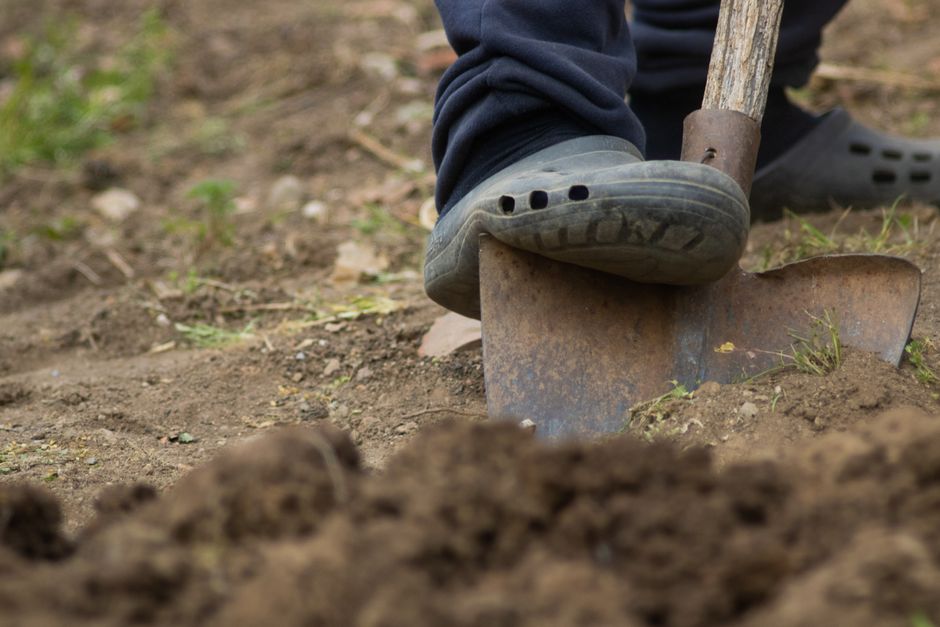
Spades have a flat, rectangular blade designed for precision work: edging garden beds, creating clean lines, turning soil in controlled amounts, and digging straight-sided holes for transplanting. The flat blade cuts through soil cleanly and excels at defined planting areas and raised bed preparation. Standard spades work across most soil types, though heavy clay requires significantly more leverage and physical effort.
Best for: Gardeners doing detailed, precision work—edging, transplanting, and bed preparation. Essential if you maintain raised beds or need defined planting boundaries.
Shovels (Curved-Blade Digging Tools)
Shovels feature rounded, curved blades optimized for scooping and moving loose materials like mulch, compost, and amended soil. The curved shape makes loading and transferring material significantly more efficient than a spade, and they're noticeably faster for bulk material movement. Garden Guru Tools offers both rounded-point and square-point shovel variants, with reinforced handles and ergonomic grips designed to reduce strain during extended use. They're less precise than spades but indispensable for larger landscape projects.
Best for: Bulk material movement, spreading compost, transferring mulch, and major landscape installation. Ideal for gardeners tackling significant bed preparation requiring large material shifts.
Garden Forks (Four-Tined Tools)
Garden forks typically feature four tines and excel at breaking up compacted soil, aerating garden beds, and turning compost. The tines penetrate dense earth more effectively than solid blades, making them essential for soil preparation in heavy clay or hardpan conditions. Forks can lift and loosen soil without full blade penetration, and they work particularly well in annual soil preparation routines.
Best for: Gardeners with compacted clay-heavy soil. Perfect for annual soil preparation, compost turning, and aerating existing beds without complete soil cultivation.
Mattocks (Heavy-Duty Dual-Head Tools)
Mattocks combine a pick end and an adze end, making them the most versatile heavy-duty option for extremely compacted earth, rocky soil, or breaking through hardpan layers. They're considerably slower for general digging and require more physical effort, but they're invaluable when dealing with dense, unyielding ground that standard tools cannot penetrate efficiently. Not a tool for routine gardening—a specialized implement for specific challenging conditions.
Best for: Gardeners dealing with dense clay, hardpan, or rocky soil. Only essential if your site has extremely compacted earth or you're breaking through subsurface barriers.
Pros & Cons
Pros
✓ Spades provide clean, precise cuts ideal for edging and transplanting without damaging surrounding plants
✓ Shovels with curved blades load and transfer materials 20-30% faster than flat-bladed alternatives for bulk work
✓ Garden forks penetrate compacted soil more effectively than solid blades, reducing physical strain in clay conditions
✓ Mattocks handle hardpan and rocky ground that standard digging tools cannot break through
Cons
✗ Buying all four tool types increases upfront cost; many gardeners don't need every category
✗ Spades and shovels become ineffective in severely compacted soil without supplementary tools like forks or mattocks
✗ Mattocks are heavy, slower for general tasks, and unnecessary for most routine gardening
✗ Handle materials (wood, fiberglass, composite) vary significantly in durability and maintenance requirements across brands
Our Verdict
The right tool depends entirely on your primary gardening tasks and soil conditions. If you're edging beds and transplanting, a spade is non-negotiable—it's precise and versatile enough for most gardeners. If you're moving bulk materials or installing new landscape features, add a shovel; Garden Guru Tools offers reinforced options with ergonomic grips that reduce fatigue during extended use. For clay-heavy or compacted soil (common in older gardens or new construction sites), a garden fork becomes essential rather than optional—it breaks up dense earth far more efficiently than a spade or shovel alone. Reserve mattocks only for extremely difficult conditions: hardpan, rocky ground, or sites where previous tools have proven insufficient. Most gardeners benefit from owning a spade + shovel combination for general work, then adding a garden fork if soil testing or experience reveals compaction issues. Avoid buying premade "complete sets" that include tools you won't use; instead, build your toolkit task-by-task as your garden demands reveal what's actually necessary.
Frequently Asked Questions
What's the actual difference between a shovel and a spade?
Shovels have curved, rounded blades optimized for scooping and moving loose materials. Spades have flat, rectangular blades designed for precision work like edging and clean soil cutting. They're not interchangeable: a spade won't move mulch efficiently, and a shovel can't edge a garden bed cleanly.
When should I use a garden fork instead of a shovel?
Use a garden fork when soil is compacted or clay-heavy. The tines penetrate dense earth far more effectively than solid blades. For loose, amended soil or bulk material movement, a shovel is faster and more efficient.
Are fiberglass handles better than wooden or composite handles?
Each has trade-offs. Wooden handles are traditional and comfortable but require regular maintenance and can splinter over time. Fiberglass handles are durable and low-maintenance but can feel less comfortable during extended use. Composite handles offer a middle ground. Your choice depends on whether you prioritize comfort (wood) or durability and minimal upkeep (fiberglass/composite).
Do I really need a mattock, or is it overkill?
Only if your garden has extremely compacted soil, hardpan layers, or significant rock content. Most gardeners manage fine with a spade, shovel, and garden fork combination. A mattock is a specialized tool for specific challenging conditions, not a general-purpose implement.
What size shovel or spade should I choose?
Standard full-size tools (with 8-10 inch blades) work for most gardeners. Smaller versions exist for container gardening or tight spaces. Test handles for comfort and reach—if the handle is too short or long for your frame, you'll experience unnecessary strain regardless of blade quality.
Our team tests gardening tools, planters, and outdoor equipment so you don't have to. Every recommendation is based on real research: customer reviews, expert opinions, and value for money. Learn more about us →
This post contains affiliate links. We may earn a commission if you purchase through our links at no extra cost to you.