Photo: Skyler Ewing / Pexels
Found this helpful? Share it!
Our team tests gardening tools, planters, and outdoor equipment so you don't have to. Every recommendation is based on real research: customer reviews, expert opinions, and value for money. Learn more about us →
When evaluating What Do You Put In The Bottom Of A Raised Garden Bed (2026), the key factors to consider are build quality, long-term durability, and whether it genuinely solves the problem it claims to address.
Put a layer of cardboard or landscape fabric at the bottom of a raised garden bed to block weeds and grass, then fill the rest with quality soil. If your bed is deeper than 12 inches, you can add coarse organic material like small logs, branches, leaves, or straw underneath the soil to save on fill cost and improve long-term drainage.
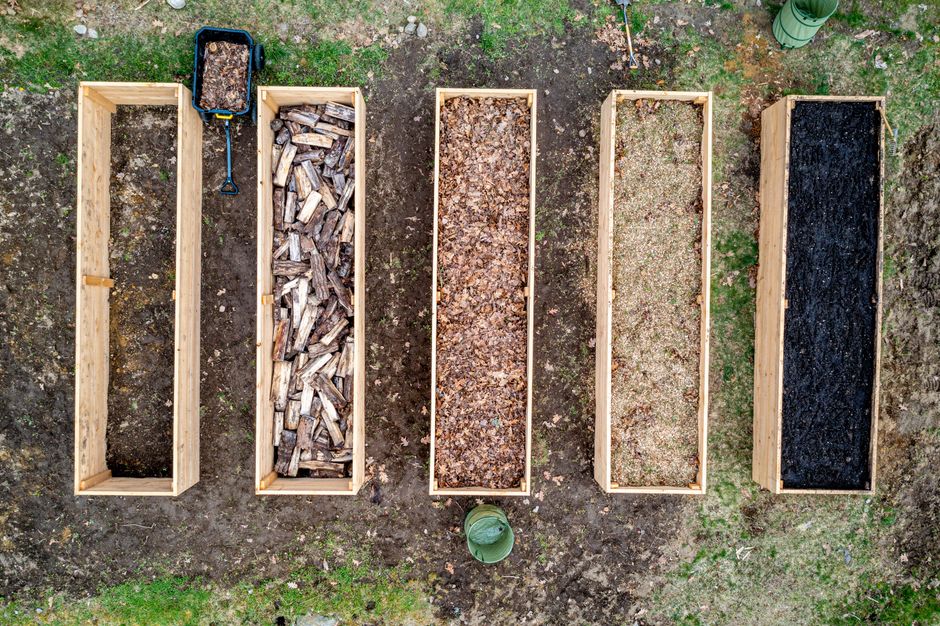
The best thing to put in the bottom of a raised garden bed is a weed barrier — plain corrugated cardboard is the cheapest and most effective option because it smothers grass and then breaks down into organic matter. On top of that, fill the bed with a soil blend of roughly 60% topsoil, 30% compost, and 10% aeration material like perlite or coarse sand. For beds taller than 12–18 inches, layer in logs, branches, leaves, and grass clippings at the bottom (a technique called hügelkultur) to reduce how much soil you need to buy. Avoid putting gravel or rocks at the bottom — it's an outdated practice that actually makes drainage worse, not better.
What goes in the bottom of your raised bed depends on three things: the height of the bed, what's underneath it, and how much you want to spend on soil.
Layer 1: The weed barrier. If your raised bed sits on grass, weeds, or bare soil, you need something to stop unwanted growth from pushing up into your vegetables. Corrugated cardboard is the gold standard here. Remove any tape and plastic labels, overlap the sheets by several inches so there are no gaps, and wet them down before adding soil. The cardboard smothers grass over about two months, then decomposes and feeds earthworms. Newspaper works too, but you'll need 8–10 sheets thick. Landscape fabric is a longer-lasting alternative, but it never breaks down and can eventually restrict root growth and worm movement.
If your bed sits on a hard surface like concrete, a patio, or a deck, skip the weed barrier and instead use hardware cloth or a permeable liner that still allows water to drain out the bottom. Never fully seal the bottom of a raised bed unless it's an intentional self-watering container.
Layer 2: Bulk fill (optional, for deep beds only). Most vegetables need 6–12 inches of good soil. Carrots, parsnips, and potatoes want closer to 12–18 inches. If your bed is 24 inches tall, filling the entire thing with purchased garden soil is expensive and unnecessary. This is where bulk fill materials come in:
Expect the bed to settle 4–8 inches over the first year as this material decomposes. Plan to top it off with compost each spring.
Layer 3: The growing medium. The top 8–12 inches should be a proper raised bed mix. A reliable ratio is 50–60% quality topsoil or garden soil, 30–40% finished compost, and 10% perlite, vermiculite, or coarse sand for aeration. Straight bagged potting mix drains too fast and gets expensive at volume; straight native soil compacts into a brick. The blend matters more than the brand.
What NOT to put at the bottom:
University extension programs are consistent on this point: drainage layers of gravel are a myth. Soil scientists have documented the perched water table effect for decades — water will not cross from a fine soil texture into a coarse one until the fine layer is nearly saturated. Extension horticulturists at multiple land-grant universities now explicitly recommend against gravel bottoms in both containers and raised beds.
Master Gardener programs generally recommend the cardboard method for beds placed over lawn, noting that sheet mulching kills turf more reliably than tilling and preserves soil structure and earthworm populations underneath. The consensus is that a raised bed should function as an extension of the ground beneath it, not a sealed box — open-bottom beds let roots reach deeper, allow beneficial soil organisms to migrate up, and drain naturally.
On hügelkultur, experienced growers offer one caveat: wood in the bottom layer temporarily draws nitrogen as it decomposes. Keep at least 8–10 inches of finished soil above the wood, and plan to add extra nitrogen (compost, blood meal, or fish emulsion) during the first two seasons. Heavy feeders like tomatoes, corn, and brassicas are most sensitive to this.
The bottom layer is only as good as the bed containing it. Cedar is the material of choice for raised beds because it contains natural oils that resist rot, insects, and moisture without any chemical treatment — meaning nothing leaches into the soil your food grows in. A well-built cedar bed will last 10–15 years or more, compared to 3–5 years for untreated pine.
A cedar raised garden bed kit also solves the depth question for you. Most kits come in standard heights from 11 to 24 inches, so you can match the bed to your crops and know exactly how much bulk fill versus soil you need. Kits assemble in under an hour with basic tools, arrive pre-cut to square dimensions, and have open bottoms by design — which is exactly what you want for drainage and root depth. If you're building multiple beds, kits are usually cheaper than buying cedar boards by the foot and cutting them yourself.
The bottom of a raised garden bed needs a weed barrier and, if the bed is deep, coarse organic material to bulk it out — never gravel or plastic. Get those layers right the first time and you'll spend the next decade harvesting instead of troubleshooting drainage problems.
As an Amazon Associate I earn from qualifying purchases.
← Back to All ReviewsThe bottom layer should consist of cardboard or landscape fabric to block weeds and prevent grass from growing up into your bed. Below that, many gardeners add a layer of coarse materials like wood chips, straw, or leaves for drainage, followed by compost and topsoil for planting.
Cardboard is highly recommended as it creates a weed barrier that breaks down over time (typically 6-12 months) while allowing water drainage. If you skip cardboard, perennial weeds and grass will quickly invade your garden bed from below.
Yes, wood chips work well as a bottom layer for drainage and will eventually decompose into organic matter. However, it's best to place cardboard or landscape fabric first to prevent weeds from growing through the wood chips.
Plastic is not recommended as it blocks water drainage and can trap moisture, leading to root rot and poor plant health. Use cardboard or landscape fabric instead, which allows proper water flow while still preventing weeds.
| Retailer | Price Range | Shipping | Link |
|---|---|---|---|
| Amazon | Check Current Price | Free (Prime) | View on Amazon → |
| Walmart | Check Site | Free over $35 | Search → |
| Target | Check Site | Free over $35 | Search → |
Prices may vary. Click through to each retailer for current pricing.