By Best Gardening Picks Daily • July 23, 2026 • Contains affiliate links
Affiliate Disclosure: As an Amazon Associate, we earn from qualifying purchases. Clicking our links costs you nothing extra and helps us keep reviewing products for free.
Summer gardening requires choosing between fundamentally different watering approaches, each with distinct trade-offs. Garden hoses offer manual control and flexibility, sprinkler systems provide automated broad coverage, and soaker hoses deliver targeted, water-efficient irrigation. The "best" option depends entirely on your garden's layout, plant types, and how much hands-on involvement you want.
Before choosing between garden hoses, sprinklers, and soaker systems, assess your garden's layout and plant types since soaker systems work best for rows and beds while sprinklers suit larger open areas, and garden hoses offer flexibility for spot watering but require more manual effort. Calculate your water pressure and available flow rate, as many properties have insufficient PSI to operate multiple sprinklers simultaneously, making soaker systems or drip irrigation a more reliable choice for consistent watering without pressure-dependent performance.
This guide compares these three core equipment categories side-by-side, examining their real advantages and limitations. Rather than promoting a single solution, we'll help you understand when each approach makes sense and how to combine them for optimal results.
Traditional Garden Hoses (Rubber & Vinyl)
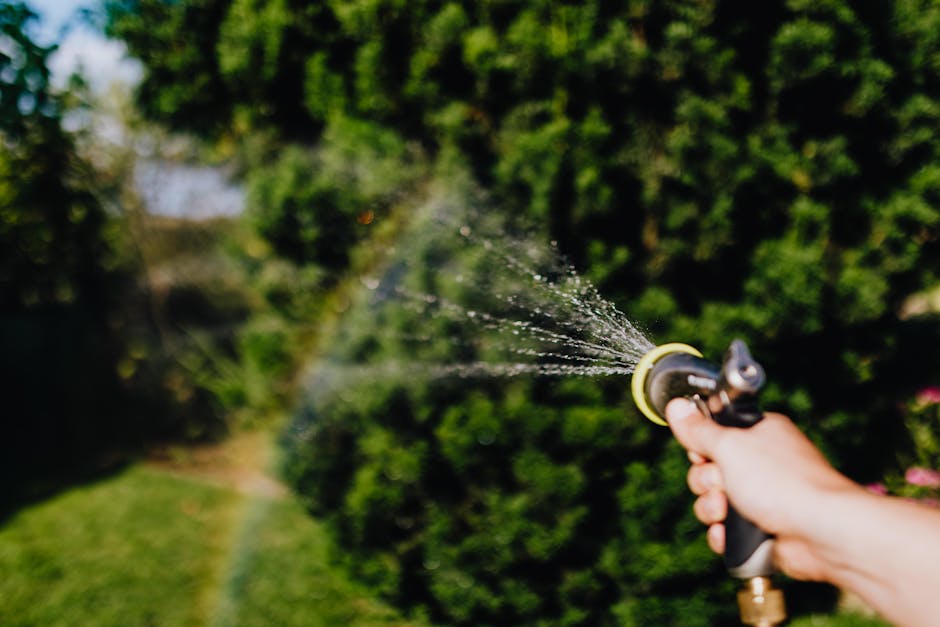
Garden hoses remain the most versatile and universally applicable watering tool. Rubber hoses provide superior durability and flexibility in hot weather, resisting UV damage and punctures better than vinyl alternatives. Vinyl hoses offer lighter weight and easier handling, making them practical for smaller gardens or users with strength limitations. Modern hoses come in various diameters (typically 1/2" to 3/4") and lengths, with engineered designs to resist kinking—a persistent complaint with older models.
Hoses require active participation: you control water pressure, duration, and placement manually. This hands-on approach allows precise watering of individual plants and immediate adjustment based on soil moisture.
Best for: Gardeners who want flexibility, those tending mixed plant varieties with different water needs, and anyone with smaller or irregularly shaped gardens where automation doesn't justify the expense.
Sprinkler Systems (Stationary & Rotary)
Sprinkler systems automate broad-area coverage, making them ideal for lawns and large garden beds. Modern systems deliver water across wide zones with adjustable spray patterns, and many integrate timers for hands-off operation during peak summer heat. They're particularly effective for newly seeded lawns and shallow-rooted plants that benefit from regular, light irrigation cycles.
The trade-off is specificity: sprinklers distribute water across entire zones, which can waste water on pathways or non-planted areas. They're also less effective on steeply uneven terrain where water pools in low spots while high areas remain dry.
Best for: Large lawn areas, uniform garden layouts, gardeners seeking automated watering schedules, and properties where regular, consistent moisture matters more than precision.
Soaker Hoses & Drip Irrigation
Soaker hoses and drip systems deliver water directly to soil at plant base level, significantly reducing evaporation loss compared to overhead sprinklers. They're engineered to release water slowly along their length, allowing deep soil penetration and minimizing runoff. Drip irrigation offers even greater precision through emitters placed at specific plant locations, though it requires more initial setup planning.
These systems are substantially more water-efficient than traditional hoses or sprinklers, making them cost-effective long-term despite higher upfront investment. They excel in vegetable gardens, flower beds, and mixed plantings where you need targeted hydration without wetting foliage (which can promote fungal disease).
Best for: Water-conscious gardeners, vegetable and herb gardens, areas with water restrictions, drought-prone climates, and gardeners who can tolerate longer setup times for significant operational savings.
Many experienced gardeners use multiple equipment types simultaneously: sprinklers for lawn areas, soaker hoses for vegetable beds, and a traditional hose for spot-watering and cleanup. This hybrid strategy leverages each tool's strengths while minimizing their individual weaknesses. For example, soaker hoses handle the high-water-need beds while a timer-controlled sprinkler manages the lawn, and a hose remains available for manual intervention.
This requires more equipment investment and setup complexity but delivers superior results across diverse garden landscapes. The flexibility to switch approaches based on seasonal conditions and plant development stages is a significant advantage.
Best for: Established gardeners with varied plantings, those with diverse landscape zones (lawn + beds + containers), and anyone willing to invest in multiple systems for optimized efficiency.
Pros & Cons
Pros
✓ Garden hoses offer immediate flexibility and control without complex installation or automation learning curves
✓ Soaker hoses and drip systems reduce water consumption by 30-50% compared to overhead watering methods
✓ Sprinkler systems enable completely hands-off operation with programmable timers during peak summer heat
✓ Combining multiple equipment types allows tailored solutions for different garden zones and plant needs
✓ Modern hoses engineered to resist kinking, UV damage, and punctures improve reliability and reduce frustration
Cons
✗ Manual hose watering is time-consuming and inconsistent, requiring regular user attention throughout summer
✗ Sprinkler systems waste water on non-planted areas and perform poorly on uneven terrain with drainage pooling
✗ Soaker hoses and drip irrigation demand significant upfront planning and installation effort, with higher equipment costs
No single watering approach dominates all situations. For pure convenience and automation, sprinkler systems win—especially for lawns and large uniform areas—but they squander water in ways soaker systems don't tolerate. For water efficiency and targeted plant hydration, soaker hoses and drip irrigation are unmatched, though they demand upfront design work and aren't ideal for quick spot-watering or cleanup tasks. Traditional garden hoses remain essential as flexible backup tools and primary solutions for smaller, complex gardens where manual control justifies the extra effort.
The most effective summer watering strategy typically combines all three: use sprinklers for lawn maintenance, soaker systems for high-value vegetable and flower beds, and keep a quality rubber hose available for manual intervention and unexpected needs. This hybrid approach costs more initially but delivers water efficiency, automation where it matters, and flexibility where you need it—the optimal balance for serious gardeners navigating diverse summer conditions.
Frequently Asked Questions
What size garden hose should I buy?
For most residential gardens, a 1/2-inch hose balances water flow and manageability. Larger 3/4-inch hoses deliver higher flow rates for expansive properties but are heavier and harder to store. Hose length depends on your garden layout—longer runs lose water pressure, so consider multiple shorter hoses or supply outlets positioned throughout your property.
How much water do soaker hoses save compared to sprinklers?
Soaker hoses and drip systems typically reduce water consumption by 30-50% versus overhead sprinklers because they minimize evaporation and runoff. Water goes directly into soil rather than misting into the air or flowing across non-planted areas. In drought-prone regions or areas with water restrictions, this efficiency difference translates to substantial cost savings over a season.
Can I use a sprinkler system on an uneven lawn?
Sprinklers struggle with significant terrain variation. Water pools in low areas while elevated sections remain dry. For uneven lawns, adjust sprinkler placement to cover high spots adequately (accepting some low-area over-watering), use multiple sprinkler zones at different heights, or combine sprinklers with soaker hoses in problem areas.
What's the best watering schedule for summer gardens?
Most gardens need 1-2 inches of water weekly during summer heat, delivered in one or two sessions depending on soil type and plant variety. Early morning watering (before 9 AM) reduces evaporation and allows foliage to dry, minimizing fungal disease risk. Adjust frequency based on rainfall—supplemental watering may not be needed after heavy rain.
Can I use soaker hoses and sprinklers together?
Absolutely. This hybrid approach is highly effective: use soaker hoses for vegetable beds and flower gardens (where you want soil-level hydration), and sprinklers for lawn areas (where broad coverage is efficient). Connect both to the same water source with a timer-controlled splitter, allowing each zone to operate on its own schedule.
How do I prevent garden hose kinking?
Modern engineered hoses resist kinking significantly better than older models, but prevention helps. Store hoses coiled loosely (not tightly wound), avoid sharp bends, drain completely before storage, and keep hoses in shade when not in use—heat accelerates material degradation. Consider hose reels that keep hoses organized and protected.
Our team tests gardening tools, planters, and outdoor equipment so you don't have to. Every recommendation is based on real research: customer reviews, expert opinions, and value for money. Learn more about us →
This post contains affiliate links. We may earn a commission if you purchase through our links at no extra cost to you.