By Best Gardening Picks Daily • July 20, 2026 • Contains affiliate links
Affiliate Disclosure: As an Amazon Associate, we earn from qualifying purchases. Clicking our links costs you nothing extra and helps us keep reviewing products for free.
When planning your outdoor living space, shade solutions are essential—especially during hot summer months. Two structurally different options dominate the market: pergolas and awnings. While they both address the same basic need, they work in fundamentally different ways and come with distinct trade-offs in cost, aesthetics, durability, and maintenance.
Before purchasing, measure your space carefully and consider whether you need permanent shade year-round (awning) or prefer adjustable dappled light that allows seasonal sun exposure for plants (pergola). Check local building codes, as pergolas often require fewer permits and are easier to remove than awnings if you relocate.
This guide compares these two categories directly, examining real costs, durability timelines, and which scenarios favor one option over the other. We'll look at both traditional fabric awnings and modern hardtop pergolas, breaking down the practical differences so you can make an informed decision based on your specific needs and budget.
Hardtop Pergolas (e.g., Kozyard models)
Modern hardtop pergolas feature open-roof designs with slatted or lattice work, typically constructed from powder-coated aluminum or polycarbonate. These structures create dappled shade by filtering sunlight while allowing air circulation. Many models can be customized with privacy screens, climbing vines, shade sails, or retractable canopies to increase coverage as needed.
Hardtop pergolas are permanent structures designed for longevity, with typical price points starting around $800 and ranging upward depending on size and materials.
Best for: Homeowners seeking a permanent, low-maintenance statement piece that adds curb appeal and property value while providing filtered shade and good ventilation.
Traditional Fabric Awnings
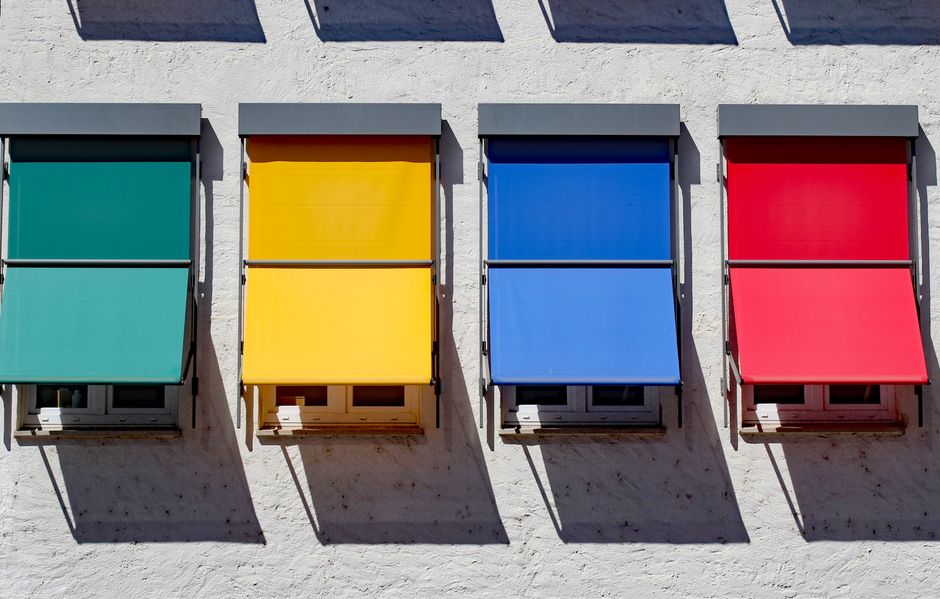
Fabric-based awnings use acrylic or vinyl materials stretched over aluminum or steel frames. They provide more complete sun protection than pergolas and can often be retracted during bad weather or when not needed. Installation costs typically range from $1,500 to $4,000, making them initially cheaper than hardtop pergolas.
However, fabric awnings require ongoing maintenance, including cleaning every 3–6 months to prevent mold and mildew. The fabric typically requires replacement every 7–10 years at a cost of $800–$2,000.
Best for: Budget-conscious homeowners who want lower upfront costs, flexible/retractable shade, and maximum UV protection, and who are willing to commit to regular maintenance.
Hybrid Approach: Pergola + Awning Combination
Some homeowners use both structures together—a pergola as the primary architectural feature with an awning or shade sail attached for additional coverage when needed. This approach combines the aesthetic and ventilation benefits of a pergola with the flexible, complete-coverage option of a retractable awning.
This solution costs more upfront but allows you to customize shade levels seasonally and maintain the design flexibility of both options.
Best for: Homeowners who want maximum flexibility, aesthetic appeal, and the option to adjust shade coverage based on season or weather without committing fully to either structure.
Pros & Cons
Pros
✓ Hardtop pergolas last 20+ years with minimal maintenance, while fabric awnings require replacement every 7–10 years.
✓ Traditional awnings offer retractable shade and better UV blocking for maximum sun protection on hot days.
✓ Pergolas add significant curb appeal and may increase property value due to their architectural presence.
✓ Awnings have lower initial installation costs ($1,500–$4,000) compared to pergolas ($800+), making them accessible for budget-conscious buyers.
✓ Pergolas allow air circulation and dappled light, creating a more open, breathable outdoor environment.
Cons
✗ Fabric awnings require regular cleaning and maintenance every 3–6 months and have ongoing replacement costs (fabric every 7–10 years at $800–$2,000).
✗ Pergolas provide only partial/dappled shade, not complete UV protection, which may be insufficient for extremely hot climates.
✗ Total cost of ownership for awnings over 20 years can exceed pergola costs due to fabric replacement and maintenance.
✗ Pergolas are permanent structures and cannot be retracted, limiting flexibility in changing weather or seasonal needs.
✗ Traditional awnings are vulnerable to weather damage, tearing in high winds, and UV fading, leading to unpredictable repair costs.
Our Verdict
Neither option is universally 'best'—the right choice depends on your priorities and timeline. Choose a hardtop pergola if you want a long-term, low-maintenance investment that doubles as a design focal point. Over 20 years, the total cost of ownership is typically lower, and you'll avoid the recurring fabric replacement and cleaning cycles of awnings. Pergolas work best in moderate climates where dappled shade is sufficient and you value aesthetics alongside function.
Choose a traditional fabric awning if you need maximum sun protection now and prefer lower upfront costs. Awnings are ideal if you want retractable flexibility, live in an extremely hot climate where complete shade is essential, or plan to move within 10 years (before major fabric replacement costs hit). However, budget for regular maintenance and fabric replacement as inevitable ongoing expenses.
Consider a hybrid approach if budget allows: use a pergola as your primary structure and add a retractable awning or shade sail for days when you need maximum coverage. This gives you the best of both worlds—permanent aesthetic value, low maintenance, and flexible shade when needed—though at a higher initial investment.
Frequently Asked Questions
How long do pergolas last compared to traditional awnings?
Hardtop pergolas typically last 20+ years with minimal maintenance. Traditional fabric awnings last 7–10 years before the fabric requires replacement, making pergolas significantly more durable over the long term.
What is the total cost of ownership over 20 years?
A pergola at $800+ upfront with minimal maintenance may cost $1,000–$2,000 total over 20 years. An awning at $1,500–$4,000 upfront plus cleaning/maintenance and fabric replacement every 7–10 years ($800–$2,000) can easily exceed $4,000–$6,000 over 20 years, making pergolas more cost-effective long-term.
Which option provides better shade coverage?
Traditional fabric awnings provide complete, maximum sun protection and UV blocking. Pergolas provide dappled, filtered shade, which is aesthetically appealing but less complete. For extreme heat, awnings are more effective; for balance between shade and airflow, pergolas work better.
Can I install a pergola or awning myself?
Installation difficulty varies by product and your skill level. Many pergola kits are designed for DIY installation with basic tools. Awnings often require professional installation due to electrical components (motorization) and structural anchoring requirements. Check product documentation for specifics.
Do pergolas require professional maintenance?
Hardtop pergolas require minimal maintenance—occasional cleaning and inspection. Fabric awnings require regular professional cleaning every 3–6 months and professional fabric replacement every 7–10 years, making them more maintenance-intensive overall.
Can I add features like motorization or retractable canopies?
Yes. Many modern pergolas can be equipped with retractable canopies or motorized louvered systems for adjustable shade. Traditional awnings are often motorized for retractability. Both options support customization, though motorization adds to upfront cost.
Our team tests gardening tools, planters, and outdoor equipment so you don't have to. Every recommendation is based on real research: customer reviews, expert opinions, and value for money. Learn more about us →
This post contains affiliate links. We may earn a commission if you purchase through our links at no extra cost to you.